

When Connectivity Fails, Operations Slow Down
At a remote site, network downtime can become operational downtime.
For organisations operating across logistics depots, agricultural estates, energy installations, construction projects and industrial facilities, connectivity is an essential part of daily operations. Employees rely on network access to communicate with head office, update inventory records, access cloud applications, monitor security systems and coordinate field activities.
When connectivity becomes unreliable, these activities may be delayed or interrupted. Teams can lose access to important information, managers may have reduced operational visibility, and routine decisions can take longer.
The challenge becomes more pronounced in locations where conventional fibre deployment is unavailable, impractical or costly.
How can organisations establish reliable connectivity in these environments while preparing for potential disruptions?
The answer starts with understanding the site’s operational requirements and implementing the right combination of Local Area Network (LAN) infrastructure, suitable connectivity technologies, power arrangements and resilience measures.
At Fibrecom Solutions Ltd, we help organisations assess, design, supply, deploy, test and document ICT infrastructure suited to their operational environments.
Why Remote-Site Connectivity Matters for Business Continuity
Business continuity is the ability of an organisation to maintain or restore essential operations when disruptions occur.
Although continuity planning often focuses on power, equipment, staffing and supply chains, network connectivity is another important consideration.
Many business processes depend on the timely exchange of information between remote facilities and central offices.
For example, a warehouse may require access to inventory management applications. An energy project may need connectivity between field offices and its central operations team. An agricultural business may need to coordinate production, storage and distribution across several locations.
Without suitable network infrastructure, these activities can become more difficult to manage.
Remote-site connectivity can support:
- Access to cloud-based business applications.
- Communication between field teams and head office.
- Inventory and warehouse management systems.
- CCTV monitoring and authorised remote surveillance access.
- Access control and security infrastructure.
- Coordination between operational buildings.
- Reporting and information sharing across multiple locations.
The specific benefits depend on the systems being used, the available bandwidth and the reliability of the supporting infrastructure.
The key consideration is not simply whether a site has a connection, but whether that connection supports the work the business needs to perform.
Microwave Links for Locations Beyond Fibre Networks
One of the main challenges in remote connectivity projects is establishing a suitable connection between a facility and an available network access point.
In some locations, deploying fibre may involve substantial civil works, difficult terrain, long distances or other practical constraints.
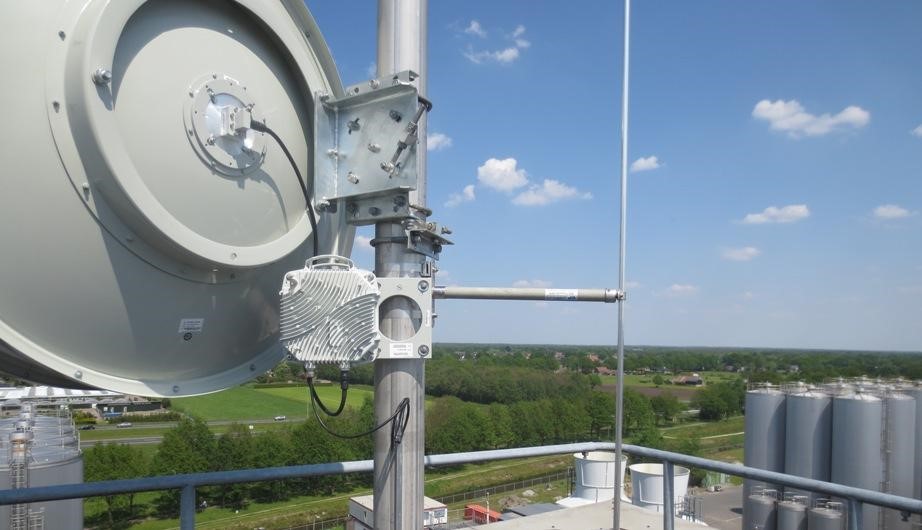
A professionally designed microwave link can provide an alternative for connecting suitable locations using radio communication between antennas.
Microwave links are used in various environments, including remote offices, industrial compounds, agricultural facilities, construction sites and energy projects.
However, not every location is suitable for a microwave connection. Proper technical assessment is essential before selecting this approach.
What should a microwave site survey assess?
Line of sight
The proposed endpoints need a suitable radio path. Buildings, terrain, trees and other obstructions can affect feasibility and performance.
Fresnel zone clearance
A clear visual path alone may not be sufficient. The Fresnel zone around the radio path must also be assessed because obstructions can affect signal performance.
Distance and link budget
The design must account for distance, antenna characteristics, radio specifications, cable losses and expected signal levels.
Frequency and interference
The selected frequency, regulatory requirements and local interference conditions must be considered.
Required bandwidth
The link must be designed around the expected traffic, including business applications, video surveillance and other connected systems.
Mounting and environmental conditions
Antenna placement, structural stability, weather exposure, maintenance access and equipment protection all influence the installation.
A microwave link should therefore be engineered for the actual site rather than selected solely on advertised equipment specifications.
Where a suitable line of sight, adequate capacity and compliant operating conditions can be achieved, microwave connectivity may help organisations connect remote facilities efficiently.
LAN Infrastructure: Distributing Connectivity Across Your Facility
Establishing a connection to a remote site is only one part of the project.
Once connectivity reaches the facility, the internal network must distribute it to the offices, equipment and systems that require access.
This is the role of a properly designed Local Area Network.
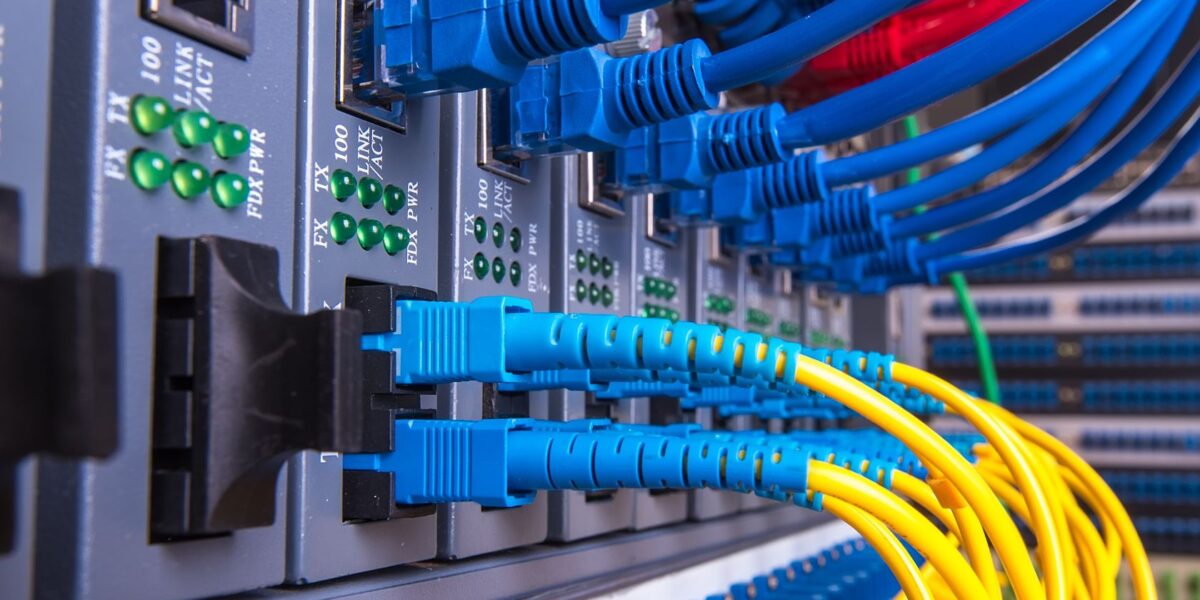
Depending on the facility’s requirements, LAN infrastructure may include:
- Structured network cabling.
- Network switches and routers.
- Wireless access points.
- Patch panels and equipment cabinets.
- Fibre-optic links between buildings.
- Power over Ethernet (PoE) infrastructure.
- Network segmentation and access controls.
For example, a logistics depot may need network connectivity in its administration offices, warehouse, dispatch area and security control room. An industrial compound may require connections between several operational buildings.
A suitable LAN design considers the number of connected devices, cable routes, distances, coverage requirements, bandwidth demand and future expansion.
For facilities with multiple buildings, the design must establish how each building will connect to the main distribution point. Fibre, copper and wireless links may each be appropriate for different parts of the installation.
The objective is to provide a network architecture that supports the required services and can be maintained as the organisation grows.
Connecting CCTV, Access Control and Business Applications
Remote-site connectivity frequently supports more than office computers.
Organisations may need to connect several systems across their premises, each with different performance, security and availability requirements.
CCTV monitoring
IP cameras generate network traffic that must reach the relevant recording or monitoring systems. Network design should account for camera resolution, frame rates, recording requirements, simultaneous viewing and available bandwidth.
Access control
Network-connected access control systems may require communication between door controllers, management applications and authorised operators. Their availability requirements should be considered during network planning.
Inventory and operational applications
Warehouse management systems, stock records, reporting tools and cloud applications depend on suitable connectivity to exchange information.
Communication between buildings
A well-designed network can help employees in separate offices, workshops, stores and operational areas communicate with central teams.
When microwave links connect separate buildings, the design must ensure that the available link capacity is appropriate for the combined traffic.
Where CCTV and business applications share infrastructure, suitable network segmentation and traffic management may be necessary.
It is also important to remember that connectivity does not automatically guarantee security or uninterrupted service. Correct configuration, access controls, power protection and maintenance remain essential.
Business Continuity Requires More Than a Reliable Network
Even a well-designed network can experience equipment faults, power failures, environmental damage or upstream service interruptions.
Organisations should therefore assess connectivity as part of a broader business continuity strategy.
Power continuity
Network equipment requires suitable power to operate. Remote facilities may need backup power arrangements, such as appropriately sized UPS systems or other suitable backup solutions.
Redundant connectivity
Where the cost of downtime justifies it, organisations may consider a secondary link or alternative connectivity path. Redundancy should be designed carefully to ensure that the backup route does not share the same critical point of failure.
Capacity planning
Bandwidth requirements can change as more users, cameras, applications and connected devices are added. Capacity should be reviewed against current usage and expected growth.
Network security
Appropriate segmentation, access controls, secure configuration and monitoring can help protect connected systems against unauthorised access and reduce the impact of certain security incidents.
Maintenance and monitoring
Routine inspections, equipment checks, performance reviews and fault reporting can help identify developing issues before they cause significant disruption.
Testing and documentation
Commissioning should verify that the installed infrastructure meets the agreed requirements. Documentation should include relevant network layouts, equipment records, link details, test results and configuration information appropriate to the handover scope.
For critical operations, these measures should form part of a documented recovery plan that identifies essential services, acceptable downtime and restoration priorities.
Connectivity Requirements Across Different Industries
Different industries depend on remote-site connectivity in different ways.
| Industry | Connectivity priorities |
| Logistics and warehousing | Inventory applications, dispatch coordination, CCTV and communication with head office. |
| Agriculture and agribusiness | Farm offices, packhouses, storage facilities, reporting and site security. |
| Energy and renewable projects | Remote offices, project reporting, security monitoring and operational communications. |
| Construction and EPC | Temporary site offices, document access, communication, inventory and security systems. |
| Industrial facilities | Connectivity between buildings, business applications, surveillance and operational coordination. |
| Commercial compounds | LAN distribution, Wi-Fi coverage, access control and shared infrastructure between facilities. |
These are examples rather than universal requirements. The appropriate solution depends on the site’s layout, applications, capacity requirements, operating conditions and acceptable level of downtime.
A connectivity assessment helps identify the infrastructure needed for the specific environment.
Common Mistakes to Avoid in Remote-Site Network Projects
Organisations can encounter avoidable problems when connectivity projects are approached primarily as equipment purchases.
Selecting equipment before assessing the site
A radio, switch or access point may meet its advertised specifications but still be unsuitable for the site’s actual conditions.
Start with a site assessment and requirements definition.
Underestimating bandwidth requirements
Business applications, cloud services and CCTV may compete for available capacity. Design the network around realistic usage rather than relying on assumptions.
Ignoring power requirements
A connectivity solution that depends on unstable power may fail precisely when the site needs it most.
Assess the power requirements of the complete installation.
Leaving testing until the end
Installation alone does not establish that the network meets the agreed requirements. Testing should be planned, performed and documented.
Overlooking documentation and handover
Without accurate network records, equipment identification and test reports, the client’s IT team may find troubleshooting and maintenance more difficult.
Treating connectivity as the entire continuity plan
A single network connection cannot eliminate every risk. Critical operations may need redundancy, backup power, security controls and a tested recovery process.
Avoiding these mistakes begins with a clear scope, sound technical design and a defined handover process.
How Fibrecom Solutions Ltd Supports Remote-Site Connectivity
Fibrecom Solutions Ltd provides ICT infrastructure design, equipment supply, implementation and deployment services for organisations requiring practical, end-to-end infrastructure solutions.
Our approach follows a structured process:
ASSESS → DESIGN → SUPPLY → DEPLOY → TEST → DOCUMENT → SUPPORT
Depending on the project, this may include:
- Remote-site connectivity assessments.
- Microwave link feasibility and installation planning.
- LAN design and structured network cabling.
- Fibre infrastructure and connectivity between buildings.
- Network switching and Wi-Fi infrastructure.
- Supporting infrastructure for CCTV and access control.
- Equipment supply and deployment.
- Testing, commissioning and technical documentation.
- Handover and ongoing infrastructure support.
We work to understand the client’s operational requirements before recommending the infrastructure needed to support them.
For a new development, this may mean coordinating ICT infrastructure planning with the wider construction programme. For an existing facility, it may mean reviewing coverage, capacity, equipment, connectivity paths and documentation to identify gaps.
The objective is to establish an appropriate technical scope and implement infrastructure that the client’s team can operate and maintain.
A Practical Checklist Before Deploying Remote-Site Connectivity
Before approving a remote-site connectivity project, consider the following questions:
Have all buildings and operational locations requiring connectivity been identified?
Have current and anticipated application requirements been documented?
Has microwave feasibility been assessed where a wireless link is proposed?
Has the internal LAN design accounted for cabling, switching and coverage?
Have power and environmental conditions been reviewed?
Are bandwidth, network security and access requirements defined?
Have resilience and backup arrangements been considered for critical services?
Are installation, testing, commissioning and documentation included in the scope?
Is responsibility for maintenance and support clearly established?
If several of these items remain unresolved, a technical infrastructure assessment can help clarify the scope before equipment procurement and deployment begin.
Conclusion: Build Connectivity Around Your Business Operations
Remote facilities still need reliable communication, access to business applications and coordination with central teams.
Whether you manage a logistics depot, agricultural estate, energy project, construction site or industrial compound, the right network infrastructure begins with understanding how your operations depend on connectivity.
A properly designed LAN, supported by a suitable microwave link where technically feasible, can help connect remote facilities and support essential business systems.
However, effective business continuity also requires attention to power, capacity, network security, resilience, testing and maintenance.
Do not wait for a connectivity failure to reveal gaps in your infrastructure.
Let Fibrecom Assess Your Connectivity Requirements
Fibrecom Solutions Ltd can help you assess your remote-site connectivity needs and determine the infrastructure required to support your operations.
Contact us to discuss a new installation, an existing network upgrade or a remote-site connectivity assessment.
Fibrecom Solutions Ltd
- Phone: 0743 177 457
- Email: info@fibrecom.co.ke
- Website: https://fibrecom.co.ke
- Address: Muthaiga Suites, Block 3, Ground Floor, Nairobi, Kenya
Reliable Technology Infrastructure, Delivered Right.